Scott 3200A Tailwheel – Fully Rebuilt: Heavy-Duty General Aviation Tailwheel Assembly
Scott 3200A Tailwheel – Fully Rebuilt: Heavy-Duty General Aviation Tailwheel Assembly
Blog Article
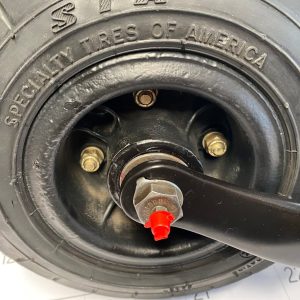
The Scott 3200A Tailwheel – Fully Rebuilt provides aircraft owners, pilots, maintenance facilities, and restoration specialists with a renewed tailwheel solution developed for compatible conventional-gear aircraft. The quality of the rebuild depends on workmanship, parts selection, dimensional condition, technical procedures, final adjustment, and available documentation.
A correctly rebuilt Scott 3200A Tailwheel Assembly can support predictable steering when installed and adjusted properly on a compatible aircraft. A Scott Tailwheel Assembly can develop wear through repeated taxi cycles, landings, vibration, dirt exposure, moisture, poor lubrication, incorrect alignment, or unsuitable adjustment.
The Aircraft Tailwheel Assembly should remain properly aligned, lubricated, secured, adjusted, and compatible with the complete aircraft steering system. The General Aviation Tailwheel should receive maintenance based on actual use, operating surface, contamination exposure, and observed condition.
Whether buyers need an Aircraft Tailwheel, Taildragger Tailwheel, or complete Aviation Tailwheel System, model identification and rebuild details should be verified.
Understanding the Scott 3200A Tailwheel
The assembly can respond to normal steering input while allowing broader movement when its internal mechanism releases appropriately. Poor ground handling can result from issues outside the tailwheel, including incorrect chain tension, fatigued springs, loose mounting hardware, bent tail springs, or misalignment.
Benefits of the Scott 3200A Tailwheel Assembly
Actual operation depends on the complete aircraft installation rather than the tailwheel assembly alone. Reusable parts may remain acceptable when they pass inspection, while worn or damaged components should be replaced appropriately.
Scott Tailwheel Assembly Service Quality
Worn components should be replaced while retained items should meet suitable inspection criteria. Transparent rebuild information supports stronger commercial credibility and buyer confidence.
Aircraft Tailwheel Assembly Benefits
The assembly carries tail weight while managing runway irregularities, side loads, repeated landing cycles, and directional forces. The tail spring and steering linkage strongly affect how the assembly responds to pilot input.
General Aviation Tailwheel Reliability
Each operating environment places different demands on the tire, wheel, fork, bearings, steering mechanism, hardware, and lubrication. Training aircraft may accumulate frequent taxi and landing cycles, while bush airplanes may experience greater surface irregularity and impact loading.
Maintaining an Aircraft Tailwheel
A well-maintained Aircraft Tailwheel can support smoother tracking and reduce unnecessary pilot workload. The tire should be inspected for cuts, flat spots, cracking, uneven wear, deterioration, contamination, and correct condition.
Benefits of a Taildragger Tailwheel
A Taildragger Tailwheel assists conventional-gear aircraft with directional control during taxi, takeoff, landing, and ramp maneuvering. Taildragger operation may expose the assembly to side loads during crosswind taxiing, landing corrections, tight turns, and directional-control events.
Aviation Tailwheel System Inspection
Every component influences how steering input reaches the wheel and how operational loads return to the aircraft. Left and right steering connections should be inspected for matching condition and correct installation.
Maintaining a Tailwheel Steering Assembly
Springs, pawls, bushings, bearings, steering arms, and internal contact surfaces can influence steering response. The mechanism should not interfere with surrounding structure, chains, springs, fairings, or nearby aircraft components.
Maintaining Aircraft Ground Handling Components
Reliable ground handling begins with a serviceable assembly and a correctly adjusted installation. Ground personnel should avoid forcing the aircraft beyond suitable steering limits.
Choosing a Scott 3200 Series Tailwheel
Operators may value the availability of maintenance experience and replacement components for suitable configurations. Model identification should be supported through reliable references and qualified review.
Maintaining a Heavy-Duty Aircraft Tailwheel
A Heavy-Duty Aircraft Tailwheel may be considered for utility, bush, training, agricultural, work-oriented, or backcountry aircraft exposed to demanding ground use. Mud, dust, gravel, and water can shorten inspection and lubrication intervals.
Maintaining Tailwheel Components
Replacement components should be selected through accurate identification and suitable technical references. Systematic inspection supports dependable long-term performance.
Aircraft Steering Tailwheel Performance
The assembly should respond without excessive delay, harsh engagement, binding, or uncontrolled movement. Pilots should use techniques appropriate to the aircraft and avoid unnecessary mechanical stress.
Installing a Replacement Aircraft Tailwheel
The removed assembly can provide useful measurements, markings, hardware details, and steering-arm orientation. Qualified personnel should verify condition, completeness, and installation suitability.
Maintaining General Aviation Gear Components
Each component contributes to aircraft support, ground control, steering, braking, or load absorption. The product description should explain whether components are rebuilt, repaired, serviced, inspected, untested, or sold for parts.
Evaluating a Scott 3200A Tailwheel
The seller should disclose which parts were replaced, which components were retained, and whether repairs or limitations remain.
- Determine whether the sale includes the tire, wheel, axle, bearings, steering springs, chains, mounting bolts, fittings, and rebuild records.
- Arrange professional evaluation when rebuild quality, structural condition, or internal serviceability remains uncertain.
- Inspect and photograph the assembly immediately after delivery before installation, adjustment, disassembly, lubrication changes, or modification.
Installing the Scott 3200A Tailwheel
Professional installation helps protect both the rebuilt Scott 3200A and the aircraft structure. The tailwheel should move through its intended range without binding, abnormal looseness, interference, or contact with surrounding components.
Controlled taxi testing may help confirm steering response, centering, ground tracking, brake interaction, and shimmy resistance.
Long-Term Scott 3200A Care
Long-term maintenance includes lubrication, tire inspection, bearing review, steering-link checks, cleaning, fastener inspection, spring evaluation, and monitoring of ground-handling performance. Changes in taxi handling should be documented and reported.
Corrosion protection may be especially important in more info humid, coastal, agricultural, outdoor-storage, or wet operating environments.
Selecting a Scott 3200A Tailwheel Assembly
The Scott 3200A Tailwheel – Fully Rebuilt may suit aircraft owners, bush operators, restoration facilities, flight schools, maintenance organizations, and pilots seeking renewed ground-handling performance. The strongest purchase decision begins with confirming model identity, rebuild scope, replaced components, retained parts, structural condition, tire status, steering arrangement, included hardware, and aircraft compatibility.
Whether the aircraft operates from pavement, grass, gravel, dirt, private strips, utility fields, or backcountry airfields, the tailwheel should match the actual aircraft and operating environment. With responsible operation, protected shipping, timely maintenance, and organized documentation, the rebuilt tailwheel can remain a valuable aviation component.
Report this page